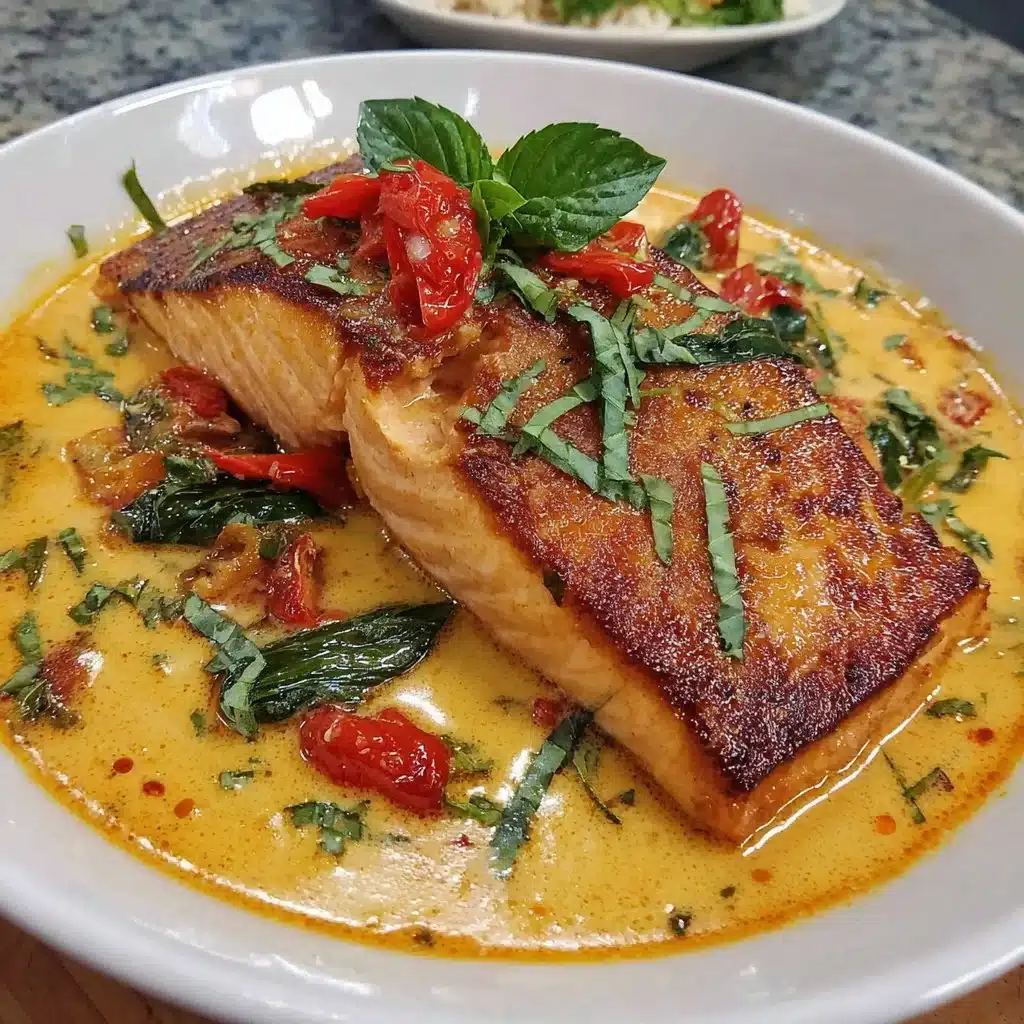
Thai Red Curry with Salmon
On the first crisp evening of fall, steam curled from my bowl and the scent of lemongrass and roasted red pepper filled the kitchen — that’s the moment this Thai Red Curry with Salmon became a household comfort.
Introduction
There’s something about cooler weather that makes a warm, fragrant curry feel like a soft blanket. This Thai Red Curry with Salmon is a reader favorite because it marries rich coconut milk and aromatic red curry paste with silky salmon flaked into every spoonful. It’s cozy but elegant, quick enough for weeknights, and special enough for weekend dinners. If you prefer your salmon prepared with minimal fuss, try my method for perfectly cooked salmon as a prep option before adding it to the curry.
Ingredients
This recipe serves 4. Gather these fresh and pantry staples:
- 1 1/2 pounds salmon fillets, skin removed and cut into 1½-inch pieces
- 1 tablespoon neutral oil (vegetable or avocado)
- 3 tablespoons red curry paste
- 2 cups full-fat coconut milk (one 14-ounce can)
- 1 cup low-sodium vegetable or chicken broth
- 1 tablespoon fish sauce
- 1 tablespoon brown sugar or palm sugar
- 1 red bell pepper, thinly sliced
- 1 small onion, thinly sliced
- 1 cup snap peas or green beans
- 2 kaffir lime leaves (optional) or zest of 1 lime
- Juice of 1 lime
- Fresh basil or cilantro for garnish
- Cooked jasmine rice, for serving
These ingredients make a fragrant Thai Red Curry with Salmon that’s balanced between creamy, salty, sweet, and bright.
Step-by-Step Instructions for Thai Red Curry with Salmon
Follow these beginner-friendly steps for a successful curry:
- Prep your ingredients: Slice the vegetables, cut the salmon into chunks, and measure your seasonings so everything is ready.
- Sauté aromatics: In a large skillet or wide saucepan, heat oil over medium heat. Add onions and sauté for 3–4 minutes until translucent.
- Toast the curry paste: Add red curry paste and stir for 1 minute to release its aroma.
- Build the sauce: Pour in coconut milk and broth, stirring until smooth. Simmer gently for 5 minutes to meld flavors.
- Season: Stir in fish sauce and brown sugar, then add lime zest or kaffir lime leaves.
- Add vegetables: Add bell pepper and snap peas; cook for 2–3 minutes so they remain bright and crisp.
- Add salmon: Gently slide salmon pieces into the simmering sauce. Reduce heat to low and simmer for 5–7 minutes, or until salmon is just cooked through. Avoid stirring too vigorously so the pieces stay intact.
- Finish with acid and herbs: Remove from heat, stir in lime juice, and garnish with fresh basil or cilantro.
- Serve: Spoon over jasmine rice and enjoy immediately.
For a fun appetizer that complements the flavors, consider serving salmon bites alongside the curry by trying salmon bites with garlic cream sauce before the main course.
Tips for Success with Thai Red Curry with Salmon
- Choose fresh salmon: Look for firm, bright fillets for the best texture. If using frozen, thaw completely and pat dry.
- Avoid overcooking: Salmon cooks quickly — aim for slightly under and let carryover heat finish it in the sauce.
- Balance the flavors: Taste before serving and adjust sweetness, salt, or acidity with sugar, fish sauce, or lime juice.
- Creaminess control: For a lighter curry, use part-light coconut milk and increase broth proportionally.
- Make it a fast weeknight: Prep vegetables ahead and keep store-bought curry paste on hand for speed; for other easy dinner ideas, this 4-ingredient ranch chicken bake shows how simple can still be satisfying.
Possible Variations
- Gluten-free: Use gluten-free soy sauce in place of fish sauce if needed and confirm your curry paste is gluten-free. If you want a gluten-free version of Thai Red Curry with Salmon, rice or rice noodles are safe serving choices.
- Extra veggies: Add sweet potatoes, eggplant, or mushrooms for heartier textures.
- Streusel topping (unexpected seasonal twist): For a playful dessert-meets-dinner idea at a fall dinner party, serve the curry and finish the evening with a spiced fruit crumble. If you want a savory crunch, try toasted coconut flakes and chopped peanuts as a topping, rather than a sweet streusel.
- Heat level: Increase red curry paste or add chopped fresh chiles for more kick.
- Sides: A bright cucumber salad or quick roasted broccoli pairs beautifully — try a simple side like air-fryer ranch broccoli for contrast.
Storage Recommendations for Thai Red Curry with Salmon
- Refrigerate: Store cooled curry in an airtight container for up to 2 days. Salmon is best eaten within this time for texture.
- Reheat gently: Warm over low heat with a splash of coconut milk or water to loosen the sauce and avoid drying out the salmon.
- Freeze guidance: Curry with salmon can be frozen, but note the salmon’s texture will soften after thawing. If you plan to freeze, consider freezing the curry base (without salmon) and adding fresh salmon when reheating.
- Meal prep tip: Cook the curry base and store separately from freshly cooked salmon for best results when reheating.
Conclusion
If you’d like another take on the dish or inspiration for adding vegetables, this helpful version, Thai Red Curry with Salmon and Vegetables – Cooking Therapy, offers a slightly different approach that’s great for comparing techniques and flavors.
Frequently Asked Questions
Q: Can I use frozen salmon for Thai Red Curry with Salmon?
A: Yes — thaw completely and pat dry before cutting into pieces. Frozen salmon can work well, but be careful not to overcook after adding it to the sauce.
Q: How spicy is red curry paste, and can I make it milder?
A: Red curry paste ranges from mild to moderately spicy. To tame heat, use less paste and add more coconut milk or a bit of sugar to balance the flavors.
Q: Is fish sauce essential?
A: Fish sauce adds umami and depth, but you can substitute low-sodium soy sauce or a mix of soy sauce and a pinch of seaweed powder for similar savory notes.
Q: Can I make Thai Red Curry with Salmon ahead of time for a dinner party?
A: You can prepare the curry base a day ahead and gently reheat it, adding freshly cooked salmon right before serving to preserve the best texture.

Thai Red Curry with Salmon
- Total Time: 35 minutes
- Yield: 4 servings
- Diet: Gluten-Free
Description
A comforting and fragrant Thai Red Curry featuring rich coconut milk and tender salmon, perfect for weeknight dinners or special occasions.
Ingredients
- 1 1/2 pounds salmon fillets, skin removed and cut into 1½-inch pieces
- 1 tablespoon neutral oil (vegetable or avocado)
- 3 tablespoons red curry paste
- 2 cups full-fat coconut milk (one 14-ounce can)
- 1 cup low-sodium vegetable or chicken broth
- 1 tablespoon fish sauce
- 1 tablespoon brown sugar or palm sugar
- 1 red bell pepper, thinly sliced
- 1 small onion, thinly sliced
- 1 cup snap peas or green beans
- 2 kaffir lime leaves (optional) or zest of 1 lime
- Juice of 1 lime
- Fresh basil or cilantro for garnish
- Cooked jasmine rice, for serving
Instructions
- Prep your ingredients: Slice the vegetables, cut the salmon into chunks, and measure your seasonings so everything is ready.
- Sauté aromatics: In a large skillet or wide saucepan, heat oil over medium heat. Add onions and sauté for 3–4 minutes until translucent.
- Toast the curry paste: Add red curry paste and stir for 1 minute to release its aroma.
- Build the sauce: Pour in coconut milk and broth, stirring until smooth. Simmer gently for 5 minutes to meld flavors.
- Season: Stir in fish sauce and brown sugar, then add lime zest or kaffir lime leaves.
- Add vegetables: Add bell pepper and snap peas; cook for 2–3 minutes so they remain bright and crisp.
- Add salmon: Gently slide salmon pieces into the simmering sauce. Reduce heat to low and simmer for 5–7 minutes, or until salmon is just cooked through.
- Finish with acid and herbs: Remove from heat, stir in lime juice, and garnish with fresh basil or cilantro.
- Serve: Spoon over jasmine rice and enjoy immediately.
Notes
For best texture, use fresh salmon and avoid overcooking. Adjust flavors to your preferred balance of sweet, salty, and acidic.
- Prep Time: 15 minutes
- Cook Time: 20 minutes
- Category: Main Course
- Method: Braising
- Cuisine: Thai