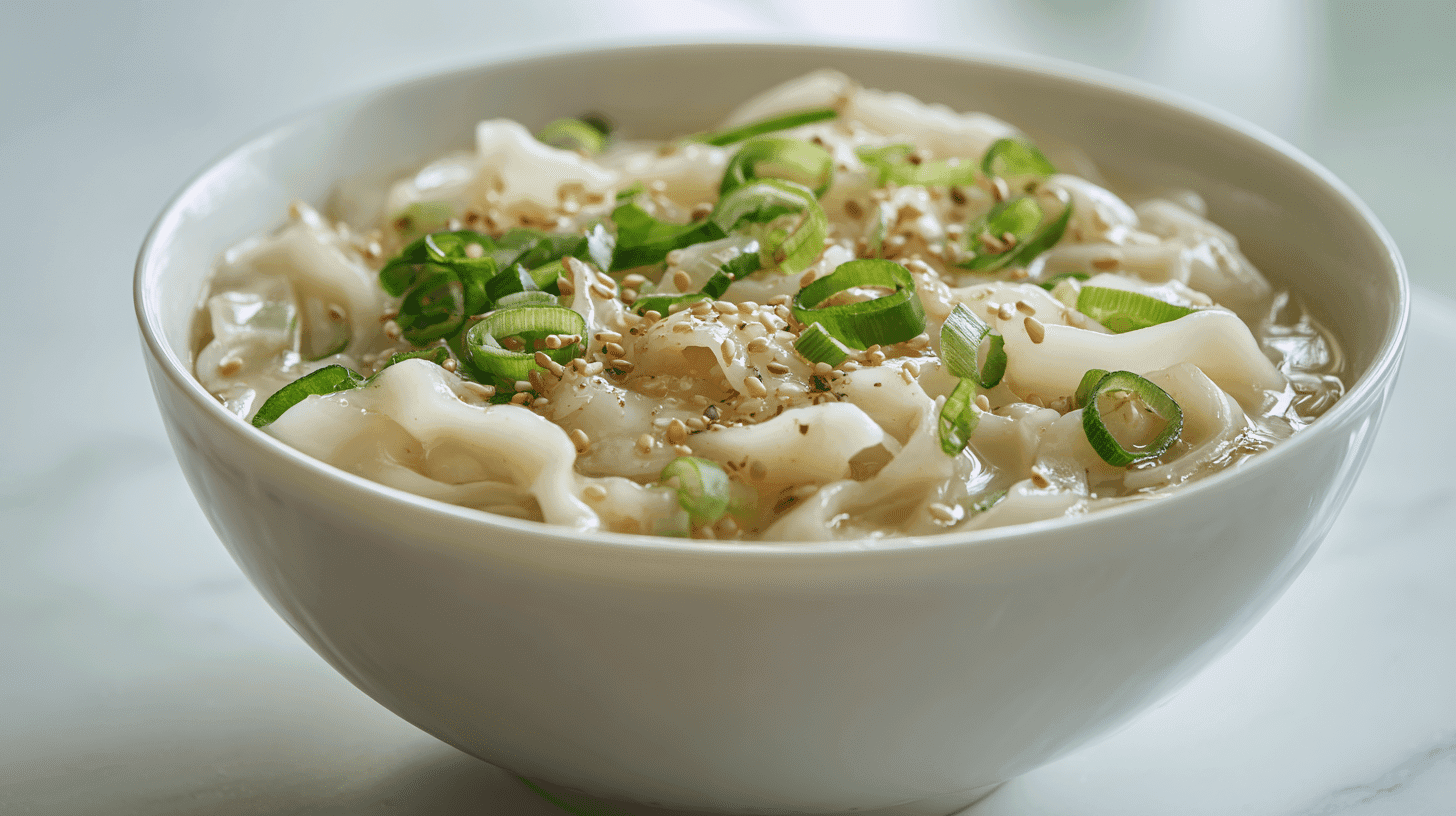
There’s something magical about Homemade Potato Noodles (Korean Style) that takes me straight back to chilly autumn afternoons, when I’d warm up with a bowl of chewy, savory noodles nestled in a rich, soul-soothing broth. My journey with this recipe began in the vibrant streets of Busan, where I first tasted Korean “gamja guksu” from a tiny family-run shop. The texture was unforgettable, silky yet satisfyingly chewy, and the flavors, deeply comforting. After years of recreating the dish in my own kitchen and tweaking it with seasonal ingredients, it became a fall favorite in my home.
In today’s post, I’ll show you how to make these delicious gluten-free noodles from scratch, how to cook them perfectly, and how to serve them up in cozy, nourishing ways. This is one of those recipes you’ll want to save, whether you’re looking for a unique homemade pasta option or a fun new dinner idea the whole family will enjoy.
Print
Homemade Potato Noodles (Korean Style)
- Total Time: 30 minutes
- Yield: 2–3 servings
Description
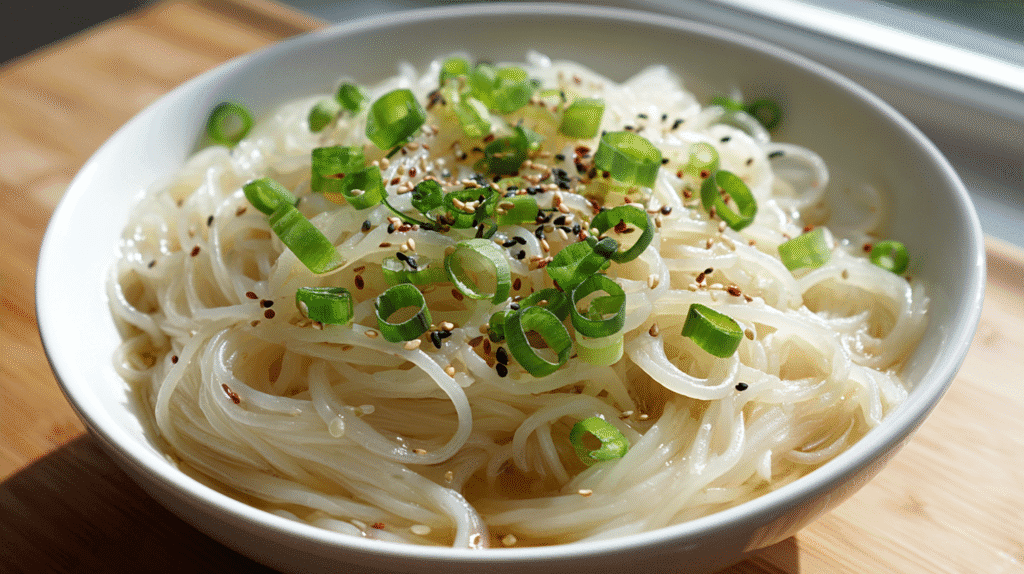
These chewy, gluten-free Korean-style potato noodles are inspired by traditional ‘gamja guksu.’ Made with just potato starch, water, and salt, they’re naturally allergen-friendly and full of cozy, comforting texture, perfect in broth or tossed with sauce.
Ingredients
- 2 cups potato starch
- ½ cup warm water
- ¼ tsp salt
- Optional Broth:
- 5 cups vegetable broth or anchovy-based Korean broth
- 1 garlic clove, minced
- 1 tsp soy sauce
- 1 tsp sesame oil
- ½ zucchini, julienned
- ½ carrot, julienned
- 1 scallion, chopped
- Toasted sesame seeds, for garnish
Instructions
- In a large mixing bowl, combine potato starch and salt. Slowly add warm water while stirring. The mixture will look crumbly, this is expected.
- Knead the mixture by hand until it begins to form a cohesive dough. If too dry, add a little more water (1 tbsp at a time). Dough should be pliable, not sticky.
- Shape dough into a ball and let rest covered for 15 minutes.
- Roll dough between parchment paper or on a lightly floured surface to about ⅛ inch thick.
- Cut into long strips about ¼ inch wide using a knife or pizza cutter. Imperfection is part of the charm.
- Bring a pot of water to a gentle boil. Add noodles in small batches and stir to prevent clumping. Cook for 3–4 minutes, until translucent and floating.
- Remove with slotted spoon and rinse under cold water to stop cooking. Serve in hot broth or with desired sauce.
Notes
Use potato starch only, not cornstarch or flour, for the right chewy texture. Cook noodles in batches and rinse with cold water for best results. Can be served in soup or stir-fried with veggies and soy sauce.
- Prep Time: 20 minutes
- Cook Time: 10 minutes
- Category: Noodles
- Method: Boiled
- Cuisine: Korean
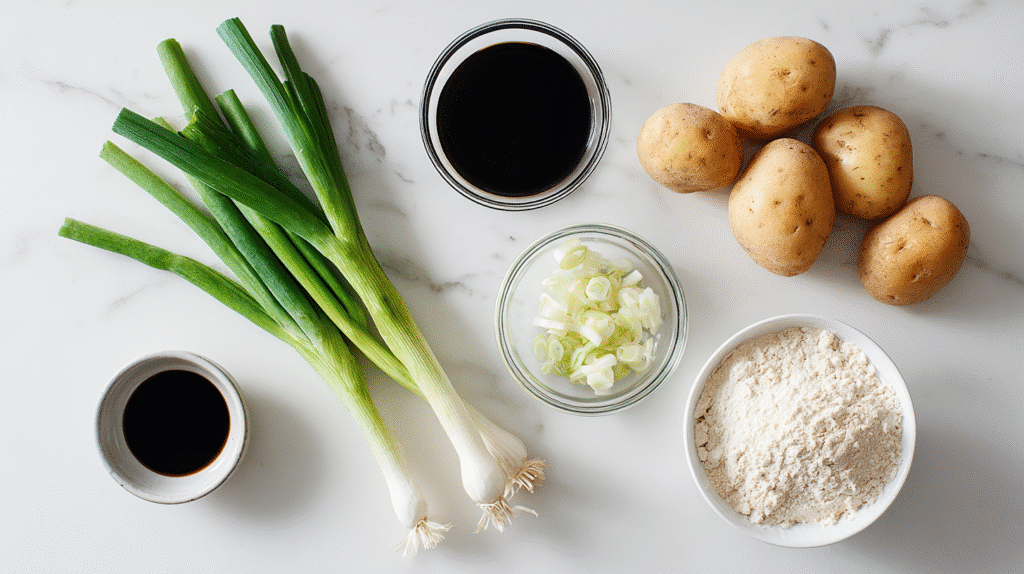
Ingredients: What You Need to Make Homemade Potato Noodles (Korean Style)
Before we jump into technique, let’s talk about ingredients. This recipe calls for only a few simple staples, but the magic is in the ratio and the preparation. Each ingredient plays a key role in creating the tender yet chewy texture that makes these noodles so iconic.
For the Noodles:
- 2 cups potato starch
- ½ cup warm water
- ¼ tsp salt
Optional Broth (for serving):
- 5 cups vegetable broth or anchovy-based Korean broth
- 1 garlic clove, minced
- 1 tsp soy sauce
- 1 tsp sesame oil
- ½ zucchini, julienned
- ½ carrot, julienned
- 1 scallion, chopped
- Toasted sesame seeds, for garnish
These noodles are naturally gluten-free and perfect for anyone looking to enjoy a clean, allergen-friendly meal. If you’re interested in pairing them with protein, check out our recipe for Spicy Ramen Lasagna or the hearty Chicken Potato Soup Recipes, both excellent companions for a noodle bowl.
Step-by-Step Instructions
Mixing and Shaping the Dough
To start, combine the potato starch and salt in a large mixing bowl. Slowly add the warm water while stirring with chopsticks or a spatula. The mixture will look crumbly at first, but don’t worry, that’s exactly what you want. Begin kneading the mixture with your hands until it starts to hold together. If it feels too dry, add a tablespoon more water. The final dough should feel pliable but not sticky.
Shape the dough into a ball and let it rest for about 15 minutes, covered with a clean towel. This allows the starch to fully absorb the moisture and helps prevent the dough from cracking during shaping.
Rolling and Cutting the Noodles
After resting, roll the dough between two sheets of parchment paper or on a lightly floured surface. Aim for a thickness of about ⅛ inch. Then, using a sharp knife or pizza cutter, slice the dough into long strips about ¼ inch wide. These rustic noodles don’t need to be perfect, part of their charm is in their handmade appearance.
At this point, you can either cook the noodles immediately or dust them with extra starch and refrigerate them for up to a day.
Cooking the Potato Noodles to Perfection
To cook your Homemade Potato Noodles (Korean Style), bring a pot of water to a gentle boil. Add the noodles in small batches to avoid clumping. Stir gently and cook for about 3–4 minutes until the noodles become translucent and float to the surface. Remove with a slotted spoon and rinse under cold water to stop the cooking process.
If you’re adding the noodles to broth, you can reheat them directly in your soup. Try using them in a comforting bowl of Korean Tofu Soup or this vibrant Asian Noodle Soup for extra depth.
Tips for Success
- Use potato starch, not flour or cornstarch. It’s essential for that signature chewy texture.
- Don’t over-knead. Potato starch behaves differently than wheat flour, and too much kneading can make the dough break.
- Cook in batches. This ensures even cooking and keeps the noodles from sticking together.
- Cold rinse after boiling. It firms the texture and stops residual heat from overcooking the noodles.
Pair your noodles with quick pickled veggies or serve alongside something crispy like Air Fryer Chicken Taquito for a satisfying meal.
Variations on Homemade Potato Noodles (Korean Style)
One of the best things about this recipe is how adaptable it is. Whether you have dietary restrictions or just want to switch it up, here are some delicious ideas:
Gluten-Free & Vegan
Luckily, the noodles themselves are already gluten-free and vegan. Make the broth with mushroom or vegetable stock and add tofu or tempeh for a complete vegan meal. Try pairing it with this Cloud Bread Breakfast Sandwich for brunch vibes.
Spicy Gochujang Sauce
Instead of serving in broth, toss the cooked noodles with a gochujang-based sauce. Mix 1 tbsp gochujang, 1 tsp sesame oil, 1 tsp rice vinegar, and a dash of sugar. Add scallions, cucumber ribbons, and sesame seeds for a cold noodle salad variation.
Stir-Fried Potato Noodles
Give your noodles a wok-fried twist! Stir-fry with garlic, bok choy, and shiitake mushrooms. Add the noodles at the end and toss everything with soy sauce and sesame oil.
Storage and Make-Ahead Tips
To Store (Uncooked Noodles):
Lay noodles on a baking sheet, dust with starch, and refrigerate for up to 24 hours. For longer storage, freeze in a single layer, then transfer to an airtight container.
To Store (Cooked Noodles):
Rinse with cold water, drizzle lightly with sesame oil to prevent sticking, and store in an airtight container for up to 2 days. Reheat in broth or steam briefly to restore texture.
To Store Leftover Soup:
Broth with veggies will keep well in the fridge for 3–4 days. Keep noodles and broth separate for best results.
FAQs about Homemade Potato Noodles (Korean Style)
Q1: Can I use sweet potato starch instead of potato starch?
Yes! Korean sweet potato starch is actually the base for “dangmyeon,” the noodles in Japchae. It yields a darker, glassier noodle but works well for this style too.
Q2: Are these noodles good for meal prep?
Absolutely. You can freeze uncooked noodles or store cooked ones with a bit of oil. They’re quick to reheat in soup or stir-fry.
Q3: How do I make this dish spicy?
Add gochugaru (Korean chili flakes) to your broth or toss finished noodles with a spicy gochujang sauce. A few drops of chili oil also work wonders.
Q4: What if I don’t have a rolling pin?
No worries! You can press the dough flat with your hands and a clean glass bottle. The rustic look is part of the charm.
Final Thoughts
Homemade Potato Noodles (Korean Style) bring comfort, flavor, and a bit of playful creativity into your kitchen. Whether you’re serving them in a steaming hot broth or tossing them in spicy sauce, these chewy noodles always hit the spot. Once you get the hang of the simple dough, you’ll find yourself making them again and again—especially when those crisp fall days roll in.
For more cozy ideas, don’t miss our Tomato Soup Grilled Cheese Casserole or crowd-pleasing Mexican Street Tacos to round out your weekly menu.